

NetSuite vs Sage Intacct: Which ERP Is Right for Growing Businesses?
Do You Need Full ERP Complexity, Or Better Financial Visibility?
Many businesses researching NetSuite are primarily looking for stronger reporting, multi-entity visibility and better financial control — but that does not always mean they need a broad operational ERP platform.
For growing finance-led businesses, Sage Intacct often delivers the reporting, automation and scalability required without the implementation complexity associated with larger ERP systems.
Sage Intacct
Often suited to growing finance-focused businesses looking for strong reporting, multi-entity visibility and a lower-complexity cloud platform.
NetSuite
NetSuite is typically better suited to organisations with broader operational complexity across inventory, supply chain, manufacturing or ecommerce workflows.
WHICH PLATFORM IS THE BETTER FIT FOR YOUR BUSINESS?
SAGE INTACCT
It is particularly well suited to organisations where finance visibility, reporting and multi-entity management are a greater priority than wider operational ERP functionality, helping finance teams gain clearer insight through real-time reporting and scalable cloud financial management.
NETSUITE
It is often more suitable for businesses managing deeper operational complexity across multiple departments, workflows and international operations, particularly where inventory, manufacturing or ecommerce functionality plays a central role.
YOU MAY NOT NEED FULL ERP COMPLEXITY

WHY GROWING BUSINESSES CHOOSE SAGE INTACCT
Built for growing finance-led businesses.
Many growing businesses evaluating ERP platforms discover they need stronger financial visibility, reporting and scalability — without the complexity of a broader operational ERP system.
Sage Intacct is often chosen by organisations looking to modernise finance operations, improve reporting and gain better business insight through advanced dashboards and multi-entity visibility.
Typically quicker to implement and easier for finance teams to adopt, Sage Intacct also integrates easily with CRM, payroll and wider business systems as businesses continue to grow.
For organisations moving from Sage 50 or Sage 200, Sage Intacct is often seen as a natural next step towards a more scalable cloud finance platform.
Faster Implementation
Stronger Financial Visibility
GROWING FINANCE-LED BUSINESSES
Sage Intacct vs NetSuite: Implementation Complexity
Choosing the right ERP platform is not just about features.
For many growing businesses, the biggest challenge is not choosing a platform with too few features — it is choosing a system that becomes overly complex to implement, manage and adopt across the business.
Sage Intacct is often the better fit where the priority is improving financial management, reporting and visibility without turning the project into a broader operational ERP transformation.
Sage Intacct
- Typically faster implementation timelines
- Easier finance team adoption
- Lower operational complexity
- Strong reporting without extensive ERP configuration
- Often requires fewer internal resources to manage
NetSuite
- Often broader ERP implementation projects
- Greater operational configuration requirements
- Longer deployment timelines in complex environments
- More suitable for organisations with advanced operational needs
For businesses primarily focused on financial management, reporting and visibility, Sage Intacct often provides a more practical and efficient implementation path.
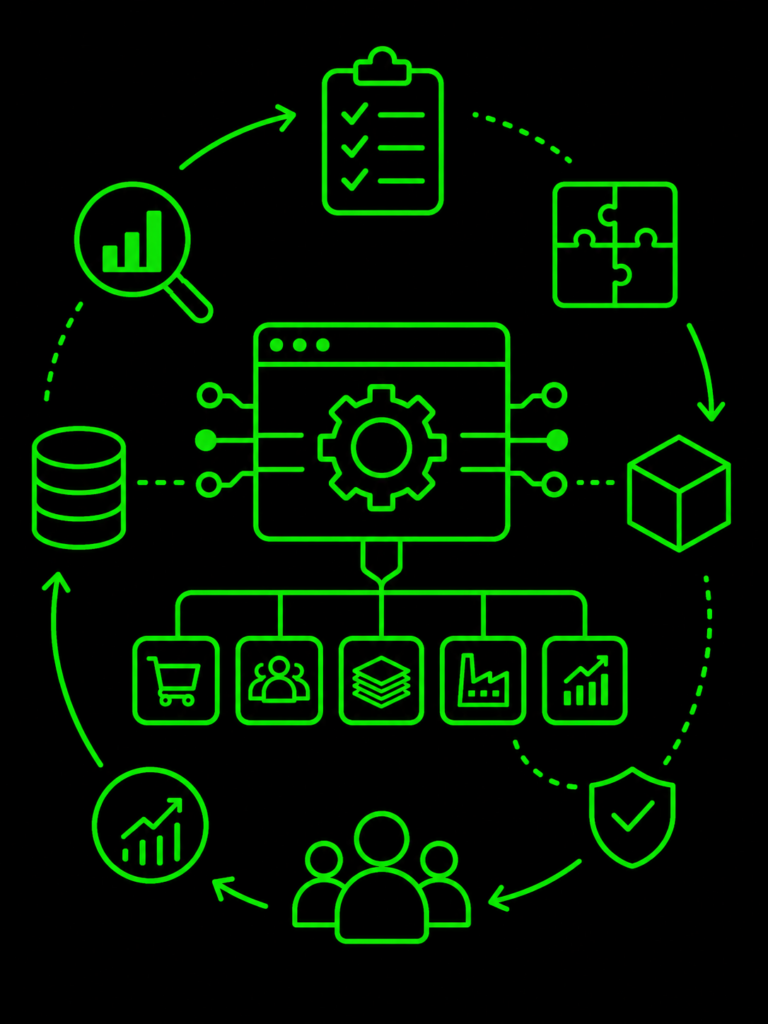
HOW DO NETSUITE AND SAGE INTACCT COMPARE?
Sage Intacct
NetSuite
Finance-first cloud platform
Broader operational ERP platform
Strong reporting and dashboards
Wider operational functionality
Faster implementation and adoption
More complex implementation projects
Lower operational complexity
Greater system depth and customisation
Strong multi-entity financial visibility
Strong inventory and supply chain management
Popular with growing SMEs
Often suited to larger complex organisations
WHY DO MANY GROWING BUSINESSES CHOOSE SAGE INTACCT?
Faster Implementation
Strong Reporting
Lower Complexity
Flexible Integrations
which type of business are you?
GROWING FINANCE-LED BUSINESSES
OPERATIONALLY COMPLEX BUSINESSES
INTERNATIONAL BUSINESSES
BUSINESSES MOVING FROM SAGE SYSTEMS
HOW DO NETSUITE AND SAGE INTACCT DIFFER IN FUNCTIONALITY?
FEATURE
Sage Intacct
NetSuite
Financial Management
Strong – Built around finance visibility, reporting and accounting workflows.
Strong – Broad financial management across larger ERP environments.
Reporting & Dashboards
Strong – Particularly well regarded for financial reporting and dashboards.
Strong – Strong reporting across wider business operations.
Implementation
Lower Complexity – Typically faster and simpler to deploy.
Higher Complexity – Often broader and more involved to implement.
Best Fit
Growing Finance-Led Businesses – Focused on reporting, scalability and visibility.
Operationally Complex Organisations – Suited to wider ERP and operational requirements.
Netsuite vs Sage Intacct faqs
Is Sage Intacct cheaper than NetSuite?
Sage Intacct is often considered the more cost-effective option for growing businesses focused primarily on finance management and reporting. NetSuite implementations can involve broader ERP scope, additional operational modules and greater implementation complexity.
Is Sage Intacct Easier To Implement Than Netsuite?
Sage Intacct is typically faster and simpler to implement, particularly for finance-led businesses. NetSuite projects are often broader in scope due to the wider ERP functionality involved.
Is Sage Intacct a full ERP system?
Sage Intacct provides strong cloud financial management functionality and supports many ERP requirements through integrations and connected platforms. NetSuite generally offers broader native ERP functionality across operations, inventory and supply chain management.
Is sage intacct better for growing SMEs?
Sage Intacct is often well suited to growing SMEs looking for strong reporting, scalability and cloud-based financial visibility without unnecessary operational complexity.
Can Sage Intacct integrate with CRM and ecommerce platforms?
Yes. Sage Intacct integrates with a wide range of CRM, ecommerce and business management platforms to extend functionality beyond core financial management.
What businesses typically move to Sage Intacct?
Many businesses move to Sage Intacct from platforms such as Sage 50, Sage 200, QuickBooks or legacy accounting systems when they require stronger reporting, automation and cloud-based financial management.
Is NetSuite or Sage Intacct better for manufacturing and distribution businesses?